30 Legendary High Kitchen Dishes – Part Three

Galeta of mushrooms and marinated foie gras

Pascal Barbo – restaurant Astrance, Paris, 2005
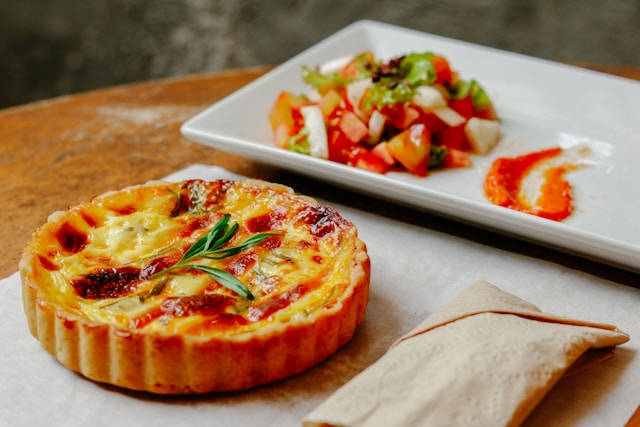
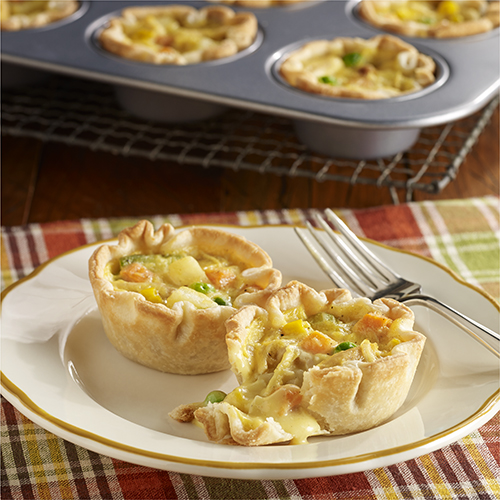
pie

Like his predecessors, the creators of the “nouvelle cuisine”, who visited Japan and returned with fresh ideas used to create the principles of new French cuisine, Pascal Barbo traveled in search of inspiration. True, in Australia, Indonesia and Mexico. He also integrated the acquired knowledge and experience into French cuisine. Barbot believed that the dish should preserve as much as possible the natural taste of the ingredients. The “gallets” are based on products that are rarely eaten raw in France: mushrooms and foie gras. Both are cut into thin slices, goose liver is slightly marinated in a verge – a light wine vinegar from fresh (not fermented) grapes. After that, they are laid out in layers on each other in the form of Napoleon cake. It is served with nut oil and lemon cream.

P.S. It is possible to go hungry from this restaurant. The feeling of “satiety” gives only the score.


Spherical olives

Ferran Adria – El Bulli restaurant, Roses, Spain, 2005

While the other chefs focused on the natural taste of products, in Spain Ferran Adria started building a “mythical temple” of modernist cuisine. In fact, he “swung at the saint” – he decided to surpass nature and give the products a flavor that will be better than their natural taste. To create this dish, he juiced green olives, decontaminated the juice from the pulp and poured it with a teaspoon into the alginate solution, where the juice was rolled into the gel sphere, again taking the form of olives. The resulting “fruits” were left in marinade overnight and served by splashing a mixture of gin and vermouth to create the effect of a “dirty martini” – a cocktail of gin and vermouth with the addition of olive marinade.

P.S. The restaurant has been closed for a long time, but jars of molecular powders and regular publications on past achievements provide a stable income for the family of Fernand Adria.


Hot potatoes, cold potatoes

Ashatz – Alinea restaurant, Chicago, 2005

When Grant Ashatsu was just over 30 years old, he was diagnosed with tongue cancer. After a long period of experimental treatment, the young Chicago chef fully recovered and, to prove his fitness for the job, created a brand new tasting menu at his Alinea restaurant. This is one of his classic dishes. The metal skewer is covered with potatoes cut out in the shape of a sphere and fried in ghee, a piece of green onion feather, cubes of butter and parmesan. The composition is crowned with a slice of truffle. There is a cold truffle-potato cream-soup on the plate. When you take out the skewer, the ingredients strung on it fall into the plate.

P.S. Today, to book a place in this restaurant, you will be offered to choose the menu and pay in advance. It is not necessary to come to the restaurant.


Eggs “Benedict”

Wiley Dufresne – restaurant wd~50, New York 2005

Eggs Benedict

Wiley Dufresne made a name for himself by remaking the dishes that have been favorite for generations of Americans. This dish is complex: deep-fried cubes of Dutch sauce (stabilized by hydrocolloids breaded in crumbs of English cake), yolk su-vide, texture reminiscent of fudge, slices of Canadian bacon thick with cigarette paper. The dish is designed to surprise with an unusual appearance and, at the same time, a familiar taste.


Edible Stones

Andoni Luis Aduris – “Mugaritz” restaurant, San Sebastian, Spain

Before taking out the food, in the restaurant “Mugarits” you will put two envelopes in front of you. In one of them there is a note with the words “150 minutes… agree!”, in the second one – “150 minutes… refuse!”. (Actually, the sentences sound more categorical: “Obey” or “Resist”). Whichever tablet … sorry, whatever envelope you choose, the result will be the same – you’ll get the same dishes, but according to the chef, the impression of food depends on your inner mood – you want to have fun or complain about how bad it is. This dish is an ideal tester: in front of you, there is a bowl of stones, only two of which are edible, and the rest are collected near the river that flows in the vicinity. The edible stones are potatoes covered with a thin layer of a mixture of white clay (also edible), lactose, salt, and water.

P.S. For me, San Sebastian is one of the best cities to live in. And there are also several dozens of tapas bars serving delicious pintxos.


Sound of the Sea

Heston Blumenthal – “The Fat Duck”, Bray, England 2007

Meticulous study of the properties of food, food technology and the history of gastronomy, as well as the creation of thoughtful “dish tricks” (the famous tangerine pate) brought Heston Blumenthal three Michelin stars for the restaurant The Fat Duck and worldwide recognition. The “Sound of the Sea” is considered the most striking example of Heston’s handwriting: a miniature copy of the “beach”, where the role of sand is performed by tapioca with “sea” foam and pieces of fish and pickled algae, which comes with an iPod hidden in the shell. Before you start eating, you should insert headphones into your ears. There is a dish listening to the screams of seagulls and the sound of waves rolling on the shore. Ideally, this should enhance the taste experience.

P.S. Blumenthal’s Pub The Hinds Head, with its traditional British eggs, bulltail pudding and soup made of green peas, brought the institution a Michelin star and the title of the best pub in 2011.


Pickled vegetables

René Redzepi – “Noma” restaurant, Copenhagen, Denmark, 2007
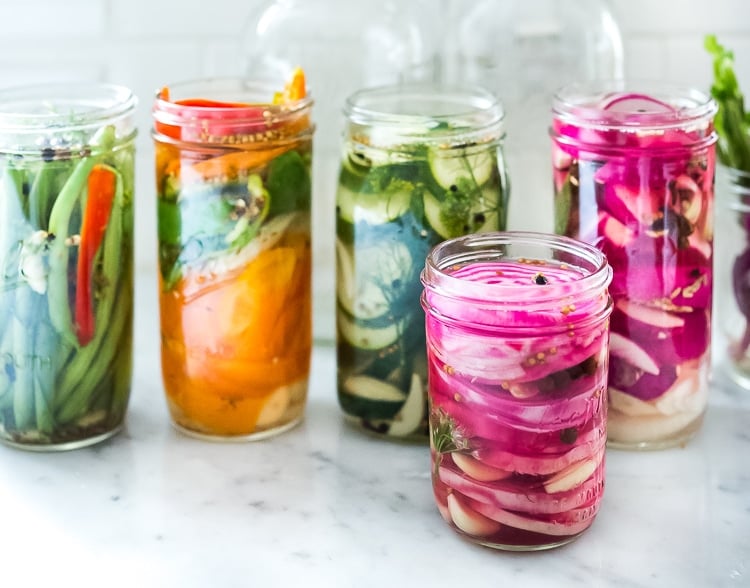
Pickled Vegetables

The new Nordic cuisine took the world gastronomic scene by storm 10 years ago and literally eclipsed everyone else for several years. All thanks to René Redzepi and his restaurant Noma. This dish, which became a parable in paganism, consists of thin slices of pickled vegetables rolled up in ‘tubules’, decorated with edible flowers and herbs and laid out over bone marrow. René introduced the fashion for ancient methods of food processing, first of all – fermentation (souring, pickling, marinating), the study of technology which has fascinated many modern chefs.

P.S. Rene has made fashion for northern cuisine, which in itself deserves respect.


Cold hot egg with maple syrup

Alain Passard – “Duke of Angen” restaurant (Le Duc d’Enghien), Angen-le-Bain, France, early 1980s

Chefs – proponents of “nouvelle cuisine” – introduced the fashion for amuse-bouches, snacks that are miniature dishes served before lunch or dinner to excite taste buds and prepare the eater for a full meal. This dish is based on contrasts: a warm sliced yolk is served on sherry cream with maple syrup and spices, which are usually seasoned with the main (salty) dishes, and is served in egg shells – a perfect example of the combination of elegant presentation and quite sophisticated technology.


Beet Rose

Daniel Patterson – Coy (Coi) restaurant, San Francisco, California, 2011

Beet Rose

Patterson Beet Rose illustrates the evolution of Californian cuisine: at the head of the table is still a local product, but over the cooking and serving of the cook “maniacs” as neurosurgeons. Each “petal” of the rose is a slice of baked beet cut off with a sharp knife, which was dipped in gently glued beet juice and glued carefully to others to form a flower. After all this “meticulous work”, the collected rose is solemnly erected on the basis of mashed beet, whipped yogurt and ice from real pink petals.


Ants and pineapple

Alex Atala – D.O.M. restaurant, Sao Paulo, Brazil, 2000s

Thanks to Alex Atal, after the phenomenon of Nordic cuisine (created by Rene Redzepi), the gastronomic world started talking about South American cuisine. Atala is a fan of local products. During one of his trips through Amazonian rain forests, he was surprised by the taste and aroma of the dish cooked by an old Indian woman – it smelled of lemongrass and ginger. When asked what smelled like that, the old lady answered: “So they are ants. In his restaurant D.O.M. (Deo Optimo Maximo – “To God, the best, the greatest”) he introduced a dish of the same dried ants, placing it on a cube of pineapple. Following his example, other chefs also slowly began to use ants and other insects as ingredients for their dishes.
30 Legendary High Kitchen Dishes – Part Two

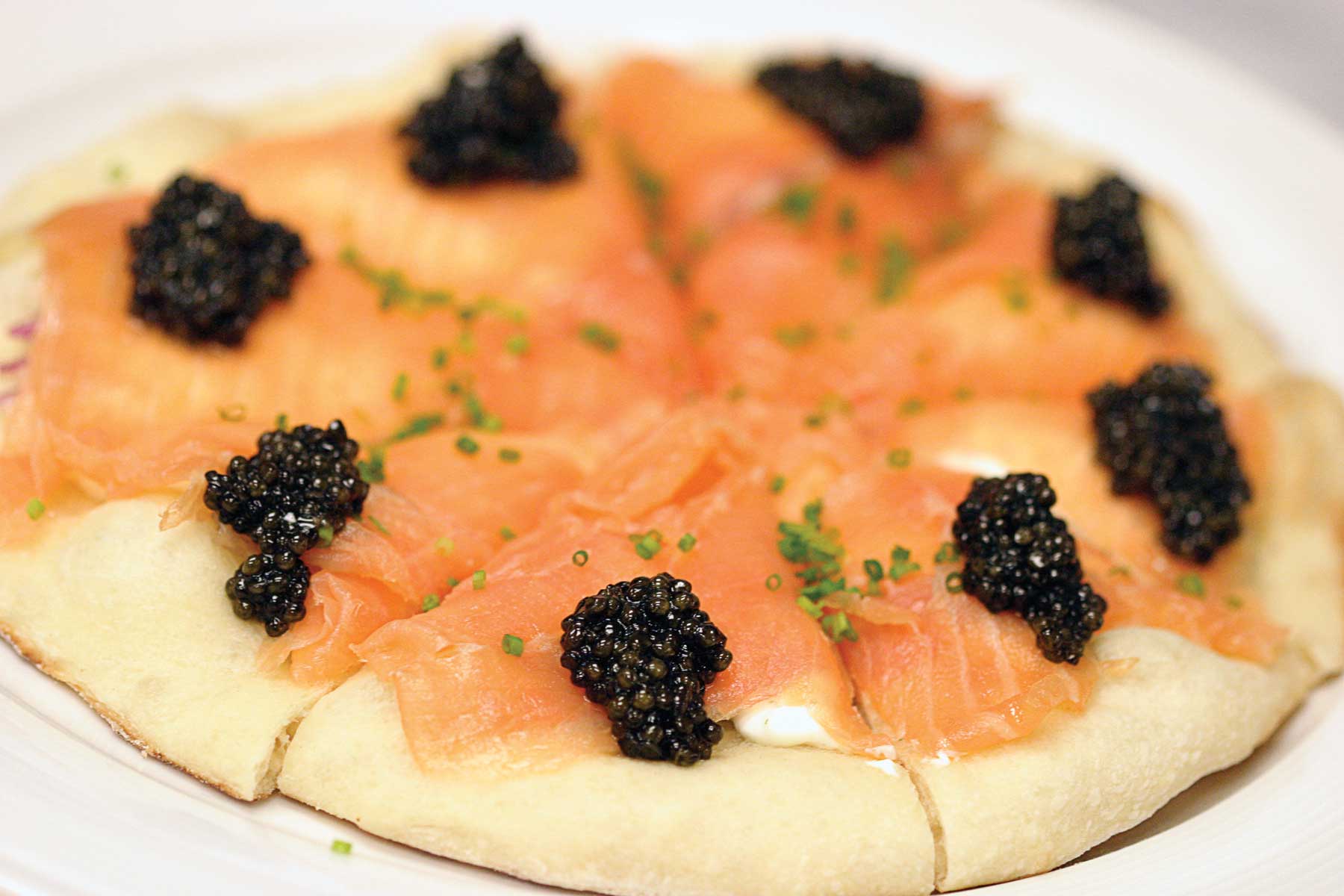
Pizza with smoked salmon and caviar

Wolfgang Park – Spago restaurant, Los Angeles, California, 1982

Pizza

The recipe for this pizza, according to Park himself, was invented quite accidentally. A famous actress, whose name is not disclosed, once came to “Spago” and ordered a brioche with smoked salmon. The bread in the kitchen, unfortunately (or fortunately), had run out at the time, had to come up with a solution urgently. As a result, a pizza with smoked salmon and caviar was born, which started the “California” (read gourmet) style of pizza.

P.S. Mr. Park earns his 15 million a year, of course, not by inventing pizza, but mainly by branding inexpensive restaurants, and even fast food at the airport.


Mashed potatoes

Joel Robuchon – “Jamin” restaurant, Paris, 1981.

When the restaurant “Zhamen” was only three months old, it received its first Michelin star for meticulous performance of “nouvelle cuisine” dishes, in particular – for excellent jelly and filigree slices of vegetables. And also for mashed potatoes. A few years later, Robuchon decided to “return to the roots” and cook rustic – rustic – country food according to his grandmother’s recipes. But his mashed potatoes had gone down in history forever by that time. Joël’s introduced 2:1 ratio of potatoes to butter has since become a standard in all high cuisine restaurants.

P.S. Tried to cook such mashed potatoes. It is a delicious fact. And 150 grams of butter for 600 grams of potatoes is quite enough. Butter is desirable from Bordier.


Egg “flower” with truffle, goose fat, sausage and dates.

Juan-Marie Arzac – “Arzac”, San Sebastian, Spain, 1980s

Juan-Marie Arzac studied under Paul Bocuz and brought the ideas and technologies of “nouvelle cuisine” to his homeland, giving the start to the Spanish culinary revolution and doing with Basque cuisine what Bocuz did with French: removing all unnecessary and heavy things from it, including fats and cooking time. For this, now a legendary dish of new Basque cuisine, Arzak let out in a food film a chicken egg with truffle essence and goose fat, tied it tightly and boiled it according to the principle of pasta eggs. Ready egg, the form reminding a flower, was served with mousse from sausages and dates, mushrooms and bread crumbs. The technology is used by many cooks and went down in the history of cooking as “Arzak egg”.

P.S. Arzak called molecular cuisine technoemotional, which has not fundamentally changed its essence: decor instead of content.


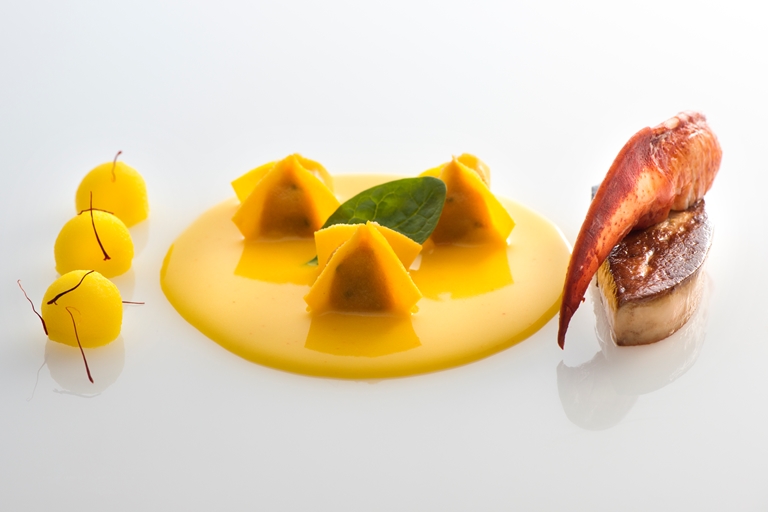
Ravioli with foie gras and truffle in chicken broth

Alain Ducasse – restaurant “Louis XV” (Le Louis XV), Monte Carlo, Monaco, 1987

Ravioli

Ducasse is one of the first and few French cooks, who spit on the “novel cousin principles”, sang and reproduced the rich taste of traditional French cuisine. In his restaurant in Monte Carlo he combined culinary traditions of Italy and his native Provence. Stuffed foie gras ravioli became one of the most famous dishes of Ducasse, reproduced many times by different chefs, including Alain himself – in 2008 he served ravioli in a topinambur console in his New York restaurant Adour Alain Ducasse.

P.S. Tried this dish in the Kiev restaurant Le Grand Café in 2005. The restaurant closed a little later.


Black cod with pasta miso

Nobu Matsuhisa – “Matsuhisa” Restaurant, Los Angeles, 1987

Nobu’s main merit is that he showed the Americans that Japanese cuisine is not only sushi rolls. Using traditional technologies, Matsuhisa marinaded the black cod fillet in a mixture of sake, miso, myrrh, and sugar, and then roasted it to a dark crispy crust. Suddenly it turned out that not only soup can be made from miso pasta, but the price of previously unnecessary (and therefore obscenely cheap) black cod has soared to heaven, not only from Los Angeles to New York (where Matsuhisa opened his second restaurant TriBeCa), but also in the rest of the civilized world.

P.S. Matsuhisa called coalfish black cod and owns the restaurants together with Robert De Niro.


Tagliatelle with oysters and caviar

Marco Pierre White – Harveys restaurant, London, 1987

Having his hand stuffed in the not the most ordinary French restaurants La Tante Claire and Le Gavroche, Marco Pierre White opened the Harviz restaurant in London and became famous as the most talented and furious young English chef. Perhaps, the most famous dish of his ‘early’ period was a set of five oyster shells, which contained oysters themselves with tagliatelle, ber blanc sauce and black caviar. Although the dish clearly had French roots (oysters and mousse were served in the shells in Le Gavroche, and tagliatelle with langoustines in the restaurant with the long name Belmond Le Manoir aux Quat’Saisons), for the English culinary scene of that time it was a real breakthrough.

P.S. The famous Gordon Ramsay studied with Marco Pierre. The question is what he learned.


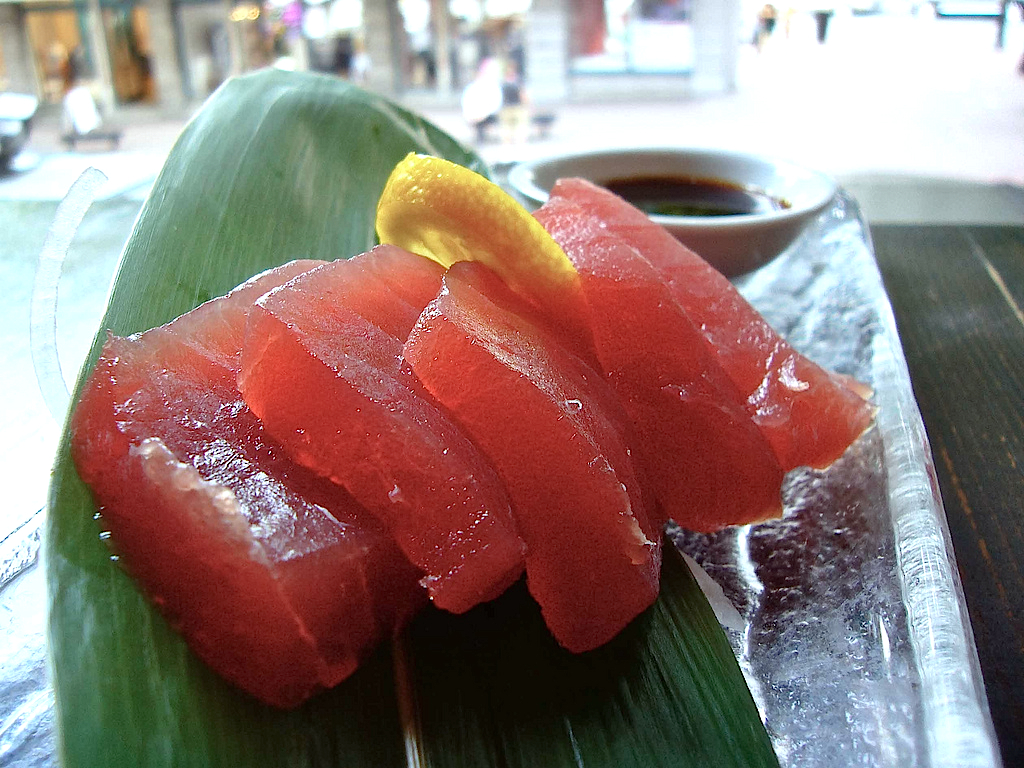
Sashimi is made of young tuna with mustard and sauce made of marinated yolk in soy sauce

Yoshihiro Murata – Kikunoi Restaurant, Kyoto, Japan, 1990’s

Young tuna with mustard

Yoshihiro Murata is a representative of the “new wave” of high Japanese kaiseki cuisine. He was one of the first Japanese chefs, who began to popularize sashimi thick slices. And his author’s sauce of pickled yolks became a perfect alternative to traditional soy sauce, wasabi and pickled ginger. Rene Redzepi, Ferran Adria and Nobu Matsuhisa highly appreciate Murata’s contribution to modern gastronomy, in particular, the proof of the importance of fermentation processes and “fifth taste” by minds.

P.S. Restaurant Kikunoi is 42nd in the list of 50 best restaurants in Asia for 2016.


Ocean trout confitures

Tetsuya Vakuda – Tetsuya’s restaurant, Sydney, Australia, 1992

Tetsuya Vakuda has combined Japanese culinary philosophy, French classical technology and Sydney local products in his kitchen. He was inspired to create this dish by chef Pierre Koffmann’s famous goose fat salmon confit. Tetsuya cooks trout in low-temperature olive oil to preserve the color of fish, sprinkles comba with algae and serves with red caviar and fennel salad.


Oysters and pearls

Thomas Keller – “The French Laundry”, California, 1994.

The role of “pearls” in this dish is performed by tapioca, watered with a thick sauce sabayon of egg yolks and white wine, and a generous portion of black caviar. Next to it, there are natural oysters.

P.S. Its two restaurants The French Laundry and Per Se have 3 Michelin stars each and are among the most expensive restaurants in the USA.

P.P.S. Keller guessed with a place. Restaurants with stars and three-digit bills are popular there.


“Shell” of dough with chicken

Chang Yang Tak – “Lung King Heen” restaurant, Hong Kong, 2000s

Shell

Chang Yang Tak is the first Chinese chef, whose restaurant received three Michelin stars. He is famous for bringing Cantonese cuisine to the world level. This dish, despite the simplicity of ingredients, became famous for its perfect cooking.

30 Legendary High Kitchen Dishes – Part One

This list includes dishes that reflect the spirit of their time or have turned the development of cooking in a new direction.

They can be found modified or carefully reproduced in different restaurants around the globe. The list may seem “disproportionate to French”, but what to do – French cuisine maintained its “monarchical” status in the world until 1980s. And the roots of modern high cuisine grow out of ‘nouvelle cuisine’.


Duck under the press

Frederick Delaire – Tour d’Argent restaurant, Paris, 1890

CHICKEN FRIED UNDER THE PRESS

The press, with which the sauce is made, was not invented by Delaire; it was invented by another Frenchman named Meshenet. What is the merit of Delaire? He was the first to make a show out of food: he took the skeleton of a fried duck, put it in an elegant silver press and started screwing the valve, crushing the bones and squeezing all the remaining juices into a silver sauce. After that, he boiled the squeezed liquid with cognac and madera and watered the resulting sauce with slices of roasted duck breast.

P.S. Now the restaurant is not so popular, but traditions and legends work to this day.


Chicken in a bubble

Fernand Poin – La Pyramide restaurant, Vienne, France, 1920s.

In his book “Ma Gastronomie” Fernando Poin writes that this dish was invented by Marius Vettar from “Café Neuf”, but Poin brought him to the rank of “grand cuisine” (not just high but great cuisine). Half a century before the invention of the immersion thermostat (which is now used to prepare dishes on the technology of su-vide, and initially it was used in laboratories), Poin stuffed the Bresse chicken foie gras and truffles, stuffed it in the pork bladder (pre-soaked in whey from sour cream) and slowly languished in a consomme with the addition of Madera and brandy. From Paul Bocuse to Daniel Bouloux, the best chefs have recreated this dish many times over the course of almost a century. Recently it was also recreated by Daniel Hamm at Eleven Madison Park, replacing chicken with vegetables – the root of celery or asparagus.

P.S. This chicken is still cooked at the Boxwood. It is very tasty and one dish is enough for two.


Drums with potato “scales”.

Paul Bocuse – L’Auberge du Pont de Collonges restaurant, Lyon, France, 1960s

The “scales” of thin slices of young potatoes are carefully lubricated with a whipped egg yolk to hold firmly on the fish fillet. The idea of the dish came to Bokuzu’s mind when he saw at one of the culinary exhibitions a fillet of slightly salted salmon covered with thin slices of cucumber. Freddy Girardet repeated the Bokuzo dish, replacing the zucchini potatoes. Charlie Palmer made a version with scallops and potato chips, and Danielle Bouloux and Gordon Ramsay carefully reproduced the original, without hiding the name of its creator.

P.S. This dish can be cooked at home with a certain skill.


Salmon with sorrel (“half-cheese” salmon)

Jean and Pierre Truagro – La Maison Troisgros Roann”, France, 1962.

Salmon with sorrel

Many chefs claim that this very dish put an end to ruthless digestion and overcooking of fish by western chefs for centuries. It is the best illustration and symbol of ‘nouvelle cuisine’ and its principles, as the creators of the ‘new French’ partially inspired by Japanese cuisine. Each component of the dish is cooked for minimal time – from bright pink salmon to blanched sorrel in cream sauce and white wine with light citrus note. Since its creation, the dish was repeatedly reproduced by French chefs and became one of the pillars of modern Lyon’s cuisine.

P.S. Lyon has many tasty restaurants, but for me the most delicious dish in this city is sweet meat. This is the name of the dish made of calf’s goitre.


Mushroom soup “Cappuccino”

Alain Chapelle – “Alain Chapelle” restaurant, Mignon, France, 1970s

Alain Chapelle, a pupil of Fernand Poin, is one of the founding fathers of the “nouvelle cuisine”. His legendary soup is a champignon consommée crowned with foam of whipped mushroom broth, under which (at the bottom of the plate) “hide” the cancer necks. The “chip” is that the foam on the soup is made without adding cream. The replica dishes were made by Eric Reeper (with lobster instead of cancer necks), Massimiliano Alaymo (with cuttlefish) and Thomas Keller with wild mushrooms instead of mushrooms.


Pig legs with morelons

Pierre Coffmann – La Tante Claire restaurant, London, 1977

Pierre Coffman’s pork legs are an exemplary dish of high cuisine, in which the main role is played not by the product, but by the mastery of culinary technology. The legs need to be cleaned of stubble, skinned and removed from them with the utmost care. The prepared meat is stewed in a mixture of port, madera, brandy and white wine, and then stuffed with minced chicken breast, calf’s goitre iron and morel. Then it is stewed until it is ready, and when served it is poured with sauce made of port, Madera, brandy and white wine. When Marco Pierre White opened the restaurant “Harveys”, its menu included the dish as “Stewed Pork Legs “Pierre Coffmann”.

P.S. The famous restaurant Au Pied de cochon in Paris was named after pig’s legs.


Young vegetables gargoyle

BRA – restaurant “BRA”, Laille, France, 1978

For each portion of “Gorgulia” cooks in “Bra” carefully laid petals, slices, chips, twigs and mashed potato 50-60 different vegetables and flowers – from nasturtium to cucumber and potatoes. This creation has set a new standard in culinary aesthetics and inspired cooks around the world for almost half a century.


Baked goat cheese with lettuce

Alice Waters – Chez Panisse restaurant, Berkeley, California, 1980

Baked Goat Cheese Salad

Alice Waters has turned California cuisine into a full-fledged culinary movement based on rational use of seasonal local products. Thanks to this dish, the Americans “got to know each other” and fell in love with classic French cheese with soft mold and looked at the usual leaf salad in a different way. Soon after the appearance in Shea Paniz, both products appeared in the restaurants’ menus all over the country. The salad became a symbol of Californian cuisine, and American restaurateurs started working closely with farmers. And sometimes they started to start their own small farms at the establishments.

P.S. Our restaurateurs have not yet started their own farms, but they are willingly photographed against the background of cows and put them on Facebook.


Rice “Gold and saffron”

Gualtiero Marchesi – Restaurant Gualtiero Marchesi Milan, 1981

Baroque dishes, which used gold, inspired medieval Milanese chefs to create dishes, at least in color imitating gold. Initially, egg yolks were used for this purpose, then – saffron. 300 years later, inspired by the French “nouvelle cuisine”, Gualtiero Marchesi offered his version of “golden” risotto: he added so much saffron that the rice acquired a bright orange color, and in the center put a thin plate of food gold. He also tried to give the rest of his dishes a kind of work of art.

P.S. The use of gold does not affect the taste of dishes in any way, but the cost is significantly affected.


Canape “Good Mood” with truffle and foie gras

Bernard Paco – L’Ambroisie restaurant, Paris, early 1980s

Christmas meal

Bernard Paco is Parisian chef, who cooks in Lyon’s culinary traditions (Lyon is considered cooler than Paris in terms of food). In the early 1980s, Paco came up with a “good mood canapé” in which he tried to convey the “taste of Lyon of the 1960s”. He baked slices of truffle and foie gras under the “lid” of puff pastry (in the style of the Bocuse) and served it on the mashed potato of black truffles. The secret was to combine the crispy air pastry with the creamy texture of the filling, plus the incredible flavor of the dish. A few years later, Daniel Bouloux prepared his variation on the theme of canape – “Scallops Black Tie” (“in a tailcoat”?) in the restaurant Le Cirque with thinner slices of truffle and scallops instead of foie gras.

P.S. Truffles and foie gras are also good separately.